
About the centre

The Centre for Schistosomiasis and Parasitology (CSP), established in 1999, is the principal reference laboratory for parasitology research in Cameroon — leading research and the implementation of control strategies for schistosomiasis and soil-transmitted helminthiasis.

CSP provides a scientific and educational environment of the utmost standard and conducts innovative research aimed at improving the health of people in endemic areas of the country.

By furthering understanding of the epidemiology and transmission of these diseases, and exploring the efficacies of different treatments, the Centre aims to radically improve the current situation in Africa.

Although the parasites responsible for these diseases have been studied extensively, the epidemiology of infections and many aspects of their biology remain poorly understood. The CSP aims to address these knowledge gaps and establish a dynamic framework for high-level research in these areas.

The CSP plays a seminal role in research for schistosomiasis and STH in Cameroon, translating its unique expertise into action to improve the health of those who need it most.

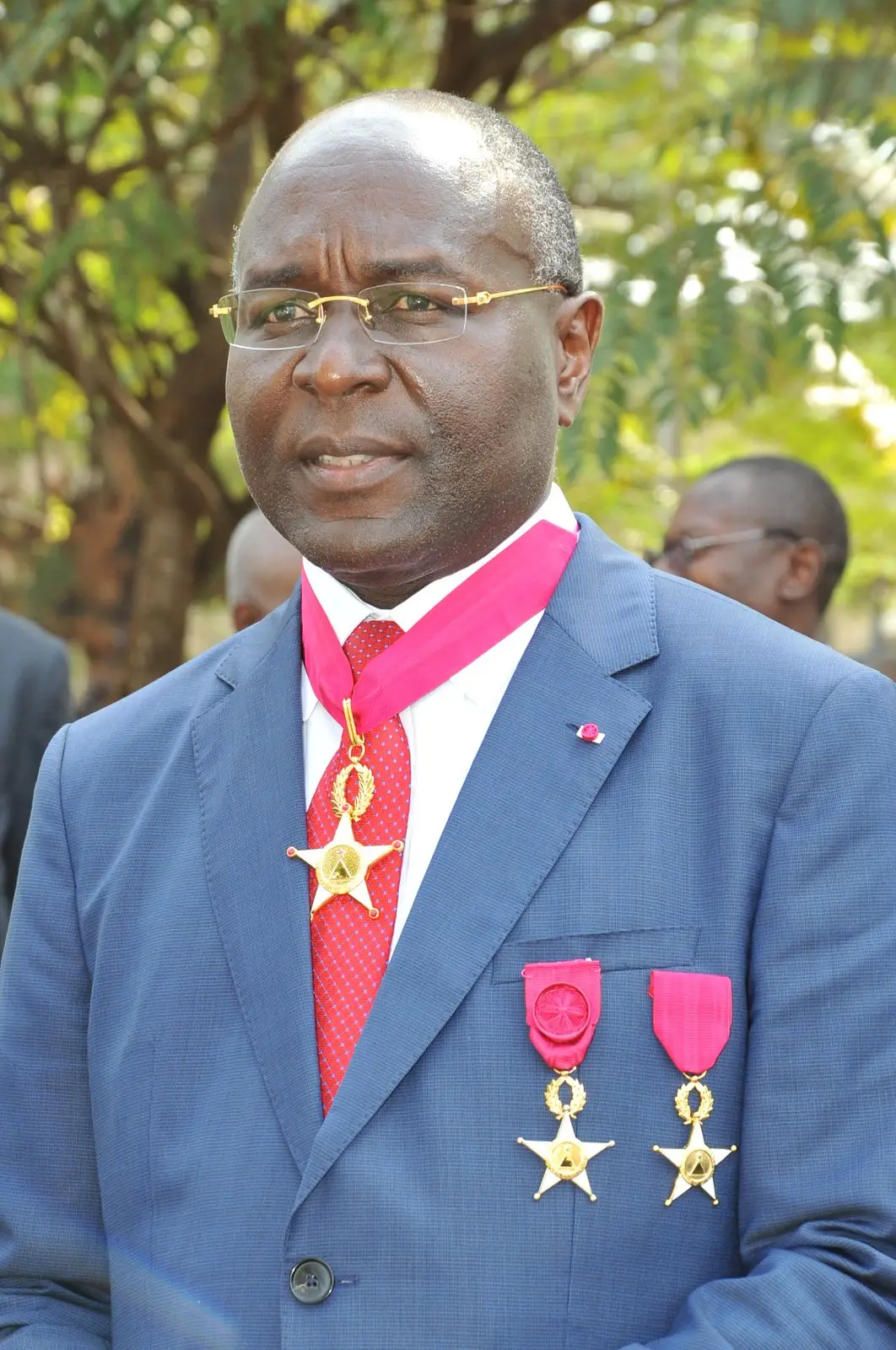
Professor Louis-Albert TCHUEM TCHUENTÉ
Founder & Director

The Centre for Schistosomiasis & Parasitology is headed by Professor Louis-Albert TCHUEM TCHUENTÉ, who set up the centre in 1999 with a view to putting in place an adequate framework and a dynamic team for high-level research


Keen defender of capacity building in research and investment in science and technology in developing countries, Prof TCHUEM TCHUENTÉ, through his scientific discoveries, has contributed to a better knowledge of the reproductive biology of schistosomes and implications of the latter on the epidemiology of schistosomiasis

Professor TCHUEM TCHUENTÉ, who is an international expert, member of several learned societies and winner of several international scientific awards, is an author of more than hundred publications in leading international scientific journals. Lecturer in Parasitology at the Yaoundé University I, Professor TCHUEM TCHUENTÉ is the national coordinator of the National Programme for the Control of Schistosomiasis and Intestinal Helminthiasis in Cameroon, one of the priority programmes of the Ministry of Public Health.


He has, notably, called into question the concept of "faithfulness among schistosomes” by proving the process of change of sexual partner and the existence of a competition for mating in these parasites. In addition, he has demonstrated the "exclusive competition among schistosomes," and has contributed to the discovery of a new species of human schistosome called Schistosoma guineensis.

The Centre for Schistosomiasis and Parasitology (CSP) which was established in 1999, is the principal reference laboratory for parasitology research in Cameroon and plays a leading role in research and implementation of control strategies for schistosomiasis and soil-transmitted helminthiasis

CSP provides a scientific and educational environment of the utmost standard and conducts innovative research aimed  at improving the health of people in endemic areas of the country. By furthering understanding of the epidemiology and transmission of these diseases, and exploring the efficacies of different treatments, the Centre aims to radically improve the current situation in Africa

Although the parasites responsible for these diseases have been studied extensively, the epidemiology of infections and many aspects of their biology remain poorly understood. The CSP aims to address these knowledge gaps and establish a dynamic framework for high-level research in these areas. The CSP plays a seminal role in research for schistosomiasis and STH in Cameroon, translating its unique expertise into action to improve the health of those who need it most.

From data to action — translating science into measurable public-health impact.

Distribution Mapping

A robust knowledge of the distribution of parasites is essential to successfully confronting them. Work carried out at CSP has enabled data on schistosomiasis and STH to be updated — enabling efficient planning, coordination and evaluation of control activities in Cameroon.

Scientific Partnership

By placing these diseases under the microscope, CSP has gained a wide range of scientific expertise and strengthens the research capacity of teams at national and international levels. The centre is linked to the University of Yaoundé I and supports the Ministry of Health in the implementation of control activities and operational research.

Multidisciplinary Team

CSP employs a multidisciplinary team of over 10 people with in-depth knowledge in epidemiology, parasitology, disease control and surveillance — including researchers, lecturers, medical doctors, laboratory technicians, and PhD & Master students with vast experience in applied field research and control programme development.

A reference centre built on a quarter-century of consistent scientific excellence.

0
Years of research excellence
0
Peer-reviewed publications
0
Core research themes
0
Specialised laboratories
0
National & international partners
0
Researchers, clinicians & technicians
A robust knowledge of the distribution of parasites is essential to successfully confronting them. Work carried out at the CSP has enabled data on schistosomiasis and STH to be updated which in turn, enables efficient planning, coordination and evaluation of control activities in Cameroon.

By placing these diseases under the microscope, CSP has gained a wide range of scientific expertise and strengthens the research capacity of research teams both at national and international levels. This has resulted in a strong multidisciplinary partnership in the international parasitology community. The centre is linked to the University of Yaounde I, Cameroon and it assists the Ministry of health in the implementation of control activities and operational research.

The centre employs a multidisciplinary team of over 10 people, with in-depth knowledge in epidemiology, parasitology, disease control and surveillance. The team which has a vast experience in applied field research and the development of control programmes is comprised of researchers, lecturers, medical doctors, lab technicians, PhD and Master students. 


Eliminating neglected tropical diseases across sub-Saharan Africa.

We envision a sub-Saharan Africa where schistosomiasis and soil-transmitted helminthiasis no longer compromise the health, education and economic potential of communities.

Aligned with the World Health Organization's 2030 roadmap for neglected tropical diseases, our work contributes to a measurable, sustainable path toward elimination — grounded in scientific evidence, national leadership, and long-term partnerships.

Framework WHO NTD Roadmap 2021–2030
Scope National & Sub-Saharan Africa
Horizon 2030 elimination targets

From a founding vision to a national reference centre.

  1. 1999

    Foundation

    Creation of the Centre for Schistosomiasis and Parasitology in Yaoundé by Professor Louis-Albert Tchuem Tchuenté, with the ambition of building a high-level research environment dedicated to neglected tropical diseases.

  2. 2003

    A new species described

    Co-discovery and formal description of Schistosoma guineensis, a new human schistosome species — a contribution that reshaped the global taxonomy of human schistosomes.

  3. 2007–2011

    Pioneering work on parasite interactions

    Landmark research on hybridization, competitive exclusion and mating behaviour between schistosome species, establishing CSP as a global reference in schistosome reproductive biology.

  4. 2008

    CSP Establishment

    Centre for Schistosomiasis and Parasitology formally established as a dedicated research institution, consolidating its structure, governance and scientific identity.

  5. 2012

    WHO Collaboration

    Designated as WHO Collaborating Centre for Schistosomiasis and Soil-Transmitted Helminthiasis — formal recognition of CSP as a global reference partner of the World Health Organization.

  6. 2012–2013

    National disease mapping

    First comprehensive mapping of schistosomiasis and soil-transmitted helminthiasis across Cameroon, published in PLoS Neglected Tropical Diseases and BMC Infectious Diseases — a foundation for the national control strategy.

  7. 2015

    National MDA Programme

    Launch of the nationwide Mass Drug Administration programme, reaching millions of children and at-risk individuals across endemic regions of Cameroon.

  8. 2018

    National Impact Survey & Precision Mapping

    Large-scale impact survey across six Cameroonian regions and publication of the Precision Mapping framework — an innovative tool now used internationally to accelerate schistosomiasis elimination.

  9. 2018

    COUNTDOWN Partnership

    Entry into the international COUNTDOWN consortium for schistosomiasis elimination — a global research initiative dedicated to scaling-up control of neglected tropical diseases.

  10. 2019+

    Integrated research platform

    Integration of genomics, GIS modelling and ethnopharmacology within a unified research platform — combining molecular, geographic and traditional knowledge to inform control strategies.

  11. 2020

    China–Africa Collaboration

    Strengthened partnership with the Chinese Center for Disease Control for knowledge exchange, joint research and South–South cooperation on schistosomiasis control.

  12. 2024 →

    Elimination Goals — Toward the WHO 2030 targets

    Scaling elimination strategies in partnership with the Ministry of Public Health, the World Health Organization and a global network of academic and philanthropic partners, working towards the WHO targets for schistosomiasis elimination in Cameroon.

A unique combination of national authority, scientific depth and global reach.

01

National Reference

Official scientific anchor of Cameroon's National Programme for Schistosomiasis and Intestinal Helminthiasis Control, working hand in hand with the Ministry of Public Health to inform policy and field operations.

02

End-to-End Capability

From field epidemiology to molecular genomics, GIS mapping, ethnopharmacology and clinical evaluation — the entire research chain operates under one roof, ensuring scientific coherence from sample collection to publication.

03

Globally Connected

Trusted partner of the World Health Organization, the Wellcome Trust, the Liverpool School of Tropical Medicine, FHI 360, and leading African universities — a network that brings world-class expertise to Cameroonian science.

04

African-Led Training Hub

Supervises MSc and PhD candidates from Cameroonian, African, European and American institutions — building the next generation of parasitologists and strengthening scientific capacity across the continent.

Professor Louis-Albert Tchuem Tchuenté, Founder and Director of CSP

Our ambition has always been to produce science of the highest international standard, conducted on African soil, in service of African communities — and to train the scientists who will carry this mission forward.

Professor Louis-Albert Tchuem Tchuenté
Founder & Director — Centre for Schistosomiasis and Parasitology
  • Internationally recognised parasitologist
  • Author of 100+ peer-reviewed publications
  • National Coordinator — Cameroon NTD Control Programme

Five interconnected steps that turn field observations into measurable public-health impact.

  1. 01

    Field Surveillance

    Systematic population surveys, GPS-referenced sampling and monthly malacological monitoring across endemic communities in Cameroon, using standardised WHO diagnostic protocols.

  2. 02

    Laboratory Analysis

    Parasitological diagnostics, molecular biology, biochemistry and genomics processed in our six specialised laboratories — from Kato-Katz smears to whole-genome sequencing.

  3. 03

    Data Modelling

    GIS mapping, geostatistical modelling and precision mapping at 1 km² resolution — integrating field data, satellite imagery and environmental covariates to identify high-risk zones.

  4. 04

    Intervention & Treatment

    Mass drug administration campaigns, monitoring of treatment efficacy and surveillance of drug resistance — in close partnership with the Ministry of Public Health.

  5. 05

    Community Engagement

    Health education, behaviour change communication and return of results to the populations we serve — ensuring that scientific knowledge translates into lasting community impact.

Eight research themes, one mission — the elimination of neglected tropical diseases.

01

Epidemiology

Systematic population surveys, geo-referenced prevalence mapping and age-stratified morbidity assessment across endemic communities in Cameroon.

02

Treatment Efficacy & Drug Resistance

Monitoring of praziquantel and albendazole outcomes in mass drug administration programmes, with investigation of emerging resistance markers.

03

Genetic Diversity

Characterisation of schistosome and intermediate host snail populations using microsatellite genotyping, SNP arrays and whole-genome sequencing.

04

Species Interactions & Hybridisation

Study of co-circulating schistosome species in the Sanaga and Wouri river basins, examining hybridisation, altered host range and drug susceptibility profiles.

05

Alternative & Complementary Medicine

Bridging traditional ethnobotanical knowledge with modern pharmacology — from healer interviews to phytochemical characterisation and rodent model validation.

06

Geographic Information Systems

Continuous infection probability surfaces at 1 km² resolution, integrating field data with satellite-derived NDVI and land cover indices for hotspot detection.

07

Functional Genomics

RNA-seq transcriptomics, proteomic profiling and CRISPR-Cas9 gene editing to investigate parasite mechanisms related to immune evasion and drug resistance.

08

Disease Control & National Programmes

Operational research and direct implementation support for Cameroon's National Programme for Schistosomiasis and Intestinal Helminthiasis Control.

Real-world results that have shaped the global elimination agenda.

6
Regions mapped
in 2018 impact survey
1
New schistosome
species described
100+
Peer-reviewed
publications
WHO
Collaborating Centre
designation (2012)

Mapping campaigns have redefined the national NTD strategy of Cameroon, enabling targeted interventions in high-burden zones.

Discovery of Schistosoma guineensis reshaped the global taxonomy of human schistosomes and expanded our understanding of parasite diversity.

Precision mapping framework is now used as a WHO-endorsed model for elimination planning in multiple sub-Saharan African countries.

Voices from our partners and alumni

"CSP's mapping work was instrumental in shaping our national deworming strategy and helping us identify the communities with the greatest need."

— Ministry of Public Health, Cameroon

"Training at CSP gave me the tools and the network I needed to launch my own research career in parasitology. The rigour and mentorship were exceptional."

— PhD Alumni, now researcher at a leading African university

"CSP is a trusted partner of the World Health Organization precisely because they combine scientific excellence with a deep commitment to field reality and community impact."

— WHO official, Neglected Tropical Diseases

World-class infrastructure in Yaoundé, dedicated to excellence in science.

Parasitology Laboratory Biochemical Laboratory Molecular Laboratory Culture Laboratory Bioterium & Animal Room Snail Room & Molluscarium

Parasitology Laboratory

Diagnostic cornerstone using Kato-Katz thick smear and urine filtration techniques. Processes hundreds of samples per campaign with WHO quality assurance protocols.

Biochemical Laboratory

Parasite characterisation through isoenzyme electrophoresis, colorimetric enzyme assays and HPLC. Equipped with spectrophotometers, centrifuges and gel systems.

Molecular Laboratory

Genetic and genomic engine featuring thermal cyclers for PCR/qPCR, gel electrophoresis and DNA/RNA extraction platforms. Supports next-generation sequencing library preparation.

Culture Laboratory

Class II biological safety cabinet with CO₂-regulated incubators for mammalian cell lines and parasite larval stage maintenance for drug screening.

Bioterium & Animal Room

Houses Swiss OF1 mice and Wistar rats under strictly regulated conditions for maintaining schistosome life cycles and testing experimental interventions.

Snail Room & Molluscarium

Maintains Biomphalaria and Bulinus snail colonies at controlled temperature and photoperiod for transmission research and molluscicide screening.

A network of governments, international organisations and academic institutions.

Scientific work advancing the global elimination agenda.

2019 Journal of Ethnopharmacology

Schistosomicidal and anti-inflammatory activities of Ozoroa pulcherrima roots on S. mansoni-induced liver pathology

Jatsa HB, Boukeng Jatsa H, et al.

2018 PLoS Neglected Tropical Diseases

Precision mapping: an innovative tool to shrink the map and accelerate schistosomiasis elimination

Tchuem Tchuenté L-A, et al.

2018 Parasitology

Prospects for the elimination of schistosomiasis and STH at the Barombi crater lakes, South-West Cameroon

Tchuem Tchuenté L, et al.

Whether you're a researcher, student, partner or donor — there is a place for you at CSP.

Study With Us

Apply for MSc or PhD supervision in parasitology, malacology, epidemiology or public health. Build your research career in an international environment.

Learn More →

Partner With Us

Co-design research projects, fund elimination programmes or join our research consortium. Leverage our expertise and infrastructure for shared impact.

Learn More →

Stay Informed

Subscribe to our newsletter for updates on publications, field campaigns, events and major research milestones across sub-Saharan Africa.

Subscribe →

Support Our Work

Help us reach more communities and train the next generation of African scientists. Your donation directly funds research and capacity building.

Donate →

Explore Further

Discover more about our work, infrastructure and partnerships.

Our Research

Dive deeper into our eight core research themes — from field epidemiology to genomics and elimination strategy.

Discover →

Our Facilities

Tour our six specialised laboratories and world-class research infrastructure in Yaoundé.

Visit →

Our Partners

Learn about the governments, universities and international organisations we collaborate with.

Connect →