Our Achievements

For 20 years, the Centre for Schistosomiasis and Parasitology has been committed to ensuring that it continuously attains its mission of research capacity building around schistosomiasis and parasitology. Staff at the centre have been committed to forging close links with other partners in the international Neglected Tropical Diseases community.

01

Epidemiological research

Mapping, transmission dynamics and co-infection patterns across Cameroon's endemic zones.

02

Parasitological science

Species discovery, genetic characterisation and drug-efficacy monitoring.

03

Community impact

Mass Drug Administration campaigns, health education and treatment delivery.

04

Capacity building

Training the next generation of African NTD scientists through MSc and PhD programmes.

Finding 01

Epidemiological findings

Two decades of nationwide surveys mapping schistosomiasis and geohelminthiasis transmission dynamics across Cameroon's endemic zones.

>50% Children co-infected
2 Schistosoma species mapped
Flagship result

Updated distribution map of schistosomiasis and geohelminthiasis across Cameroon

A nationwide re-mapping effort revising the baseline for prevalence and transmission across all endemic regions — the reference input for CSP's targeting of Mass Drug Administration campaigns, and the direct input feeding Cameroon's contribution to WHO NTD country-profile datasets.

10 Regions surveyed
1985 → 2011 Comparative baseline
6 Impact-survey regions (2018)
01

Polyparasitic infections

Demonstration that more than 50% of children carry at least two helminth parasites simultaneously — a paradigm shift for diagnostic and treatment protocols nationwide.

  • Co-infection prevalence >50% in school-age children
  • Systematic screening across sentinel sites
  • Basis for combined-treatment protocols
02

Synergistic interactions

Evidence of synergistic biological interactions in concurrent infections, altering morbidity profiles beyond the sum of single-parasite effects.

  • Immunological interaction patterns
  • Elevated morbidity in co-infected hosts
  • Diagnostic implications for mixed cases
03

Genetic predisposition

Suggestion of a genetic predisposition of certain individuals to polyparasitism and heavy infections — opening a host-genetics research axis.

  • Familial clustering of heavy infections
  • Host-genetics hypothesis for chronic carriers
  • New research axis in CSP's programme
04

Mixed schistosome infections

Dynamic epidemiological changes leading to fluctuating transmission and high frequency of mixed S. haematobiumS. mansoni infections, with implications on morbidity and diagnosis.

  • Sympatric transmission zones documented
  • Revised diagnostic algorithms for endemic areas
  • Cross-species treatment monitoring
Timeline

From baseline to national policy

1985

Historical STH prevalence baseline documented across Cameroon regions.

2005

CSP established at University of Yaoundé I — nationwide surveillance takes structured shape.

2011

Comparative re-mapping shows measurable decline of STH after annual deworming.

2018

National Schistosomiasis & STH Impact Survey conducted in 6 regions of Cameroon.

Ongoing

Continuous updating of endemic-zone classification for MDA campaign targeting.

Species discovery

Description of a new human schistosome species: Schistosoma guineensis

A landmark taxonomic contribution — the formal description of a separate human schistosome species, revising the understanding of the S. haematobium group and its epidemiological boundaries in Central and West Africa.

01

Decline of S. intercalatum

Documented decline of Schistosoma intercalatum, now classified as an endangered species in Cameroon — a rare case of a human parasite on the brink of extinction.

02

Genetic characterisation

Genetic characterisation of various parasite strains circulating in Cameroon, informing molecular epidemiology and cross-border transmission tracking.

03

Praziquantel efficacy

Field and clinical evaluation of Praziquantel efficacy against Schistosoma haematobium, feeding into national and WHO treatment guidelines.

04

Mixed-infection treatment

Efficacy of treatment protocols in mixed schistosome infections — critical evidence for regions where haematobium and mansoni co-circulate.

Flagship programme

Mass Drug Administration campaigns in partnership with the National Programme

Nationwide MDA campaigns delivered in collaboration with the National Program for the Control of Schistosomiasis and STH — the largest treatment-delivery channel through which CSP's research feeds into public health at population scale.

01

Community sensitization

Health education talks and community sensitization campaigns designed to build local awareness of transmission, hygiene and treatment uptake in endemic areas.

02

Drug efficacy monitoring

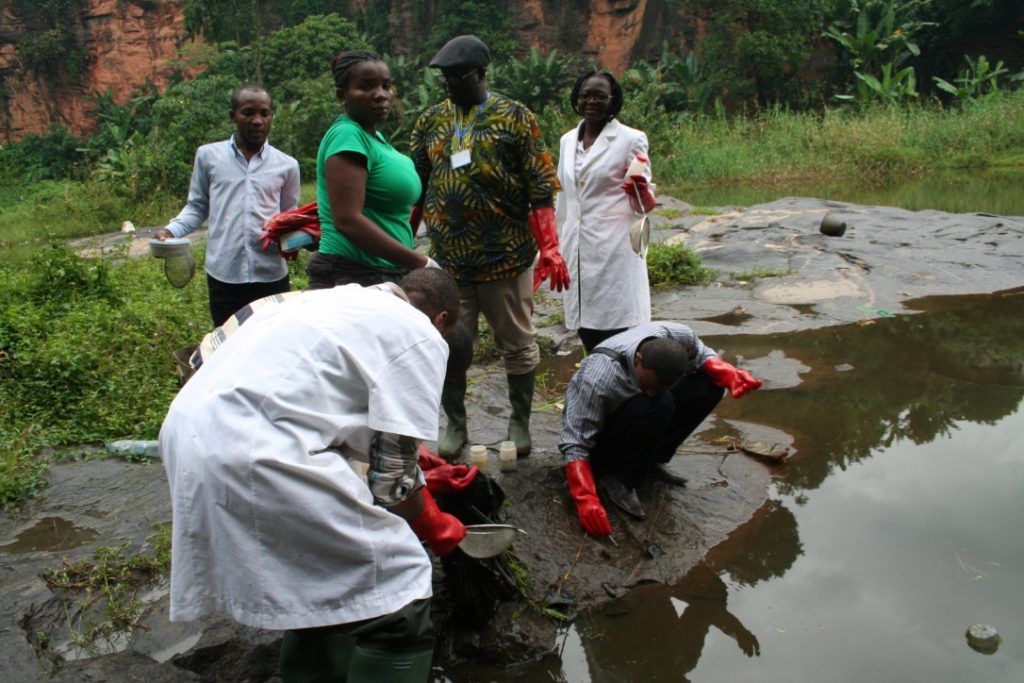
Ongoing monitoring of anthelminthic drug efficacy and treatment impacts in the field, feeding evidence back to the national control programme.

03

Malacology training

Training Course in Malacology delivered to MSc students from University of Yaoundé I, building the next generation of snail-vector specialists.

04

Diagnostic capacity building

Hands-on capacity building on schistosomiasis diagnostic techniques for MSc students, from Kato-Katz microscopy to modern molecular assays.

Publications legacy

Over 100 papers in high-level international scientific journals

Two decades of continuous scientific output — CSP researchers have published more than 100 peer-reviewed articles in leading international journals, cementing Cameroon's role in the global schistosomiasis research community.

01

Impact Survey 2018

Schistosomiasis and STH Impact Survey 2018 conducted in 6 Regions of Cameroon — a nationwide reference dataset feeding into the National Control Programme.

02

China-Africa Malacology training

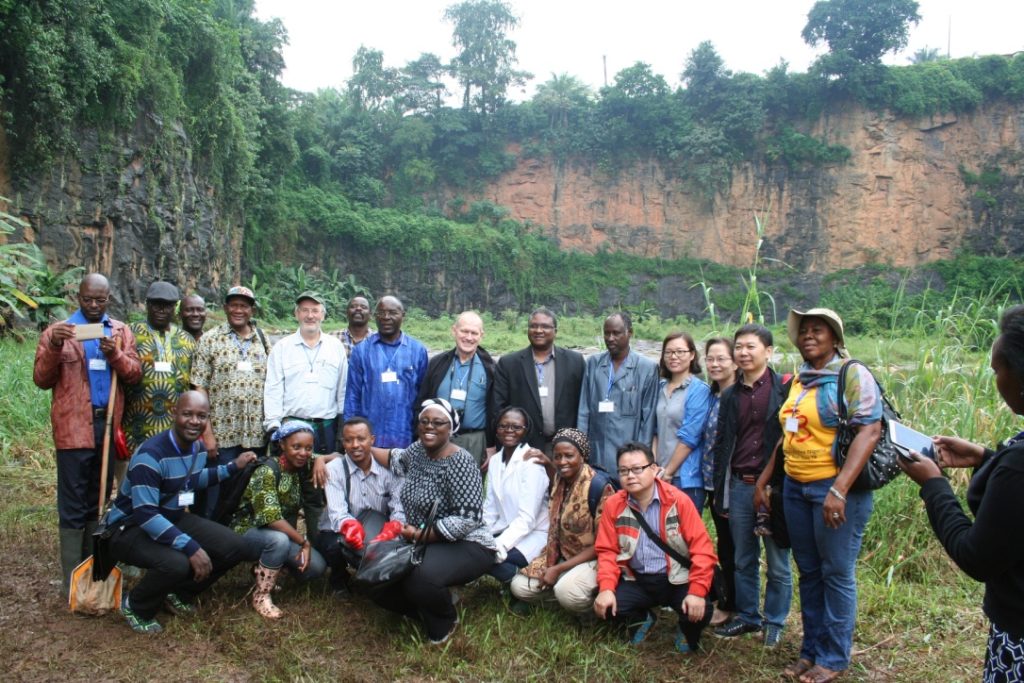
Facilitated Training course in Malacology during the 2nd China-Africa Meeting in Cameroon, bringing snail-vector expertise to a continental audience.

03

Diagnostic capacity — Africa & China

Diagnostic capacity building for African and Chinese participants during the 2nd China-Africa Meeting on the Elimination of Schistosomiasis.

04

Liverpool MSc collaboration

6 Master theses from Liverpool School of Tropical Medicine produced through research conducted in collaboration with the Centre.

01

The Natural History Museum

London · United Kingdom
02

University of Copenhagen

Copenhagen · Denmark
03

University of Ghent

Ghent · Belgium
04

Institute of Tropical Medicine

Antwerp · Belgium
05

Institute of Cellular Biology

Roma · Italy
06

CBETM University of Perpignan

Perpignan · France
07

Schistosomiasis Control Initiative

London · United Kingdom
08

World Health Organization

Geneva · Switzerland
09

Liverpool School of Tropical Medicine

Liverpool · United Kingdom
10

University of Aberdeen

Aberdeen · United Kingdom
11

Swiss Tropical & Public Health Institute

Basel · Switzerland
01

Ministry of Public Health

Yaoundé · Cameroon
02

University of Yaoundé I

Yaoundé · Cameroon
03

University of Buea

Buea · Cameroon
04

Centre Pasteur of Cameroon

Yaoundé · Cameroon
05

Medical Research Centre IMPM

Yaoundé · Cameroon
01
2 M+

People reached through Mass Drug Administration

Cumulative population reached by MDA campaigns conducted with the National Programme for the Control of Schistosomiasis and STH.

02
75%

MDA coverage achieved

National treatment coverage attained across school-age children and at-risk populations in endemic regions.

03
40+

Students mentored (MSc & PhD)

Cameroonian and international students trained through CSP's research programmes, MSc modules and doctoral supervision.

04
30+

Sentinel sites across Cameroon

Active field sites where CSP monitors transmission, drug efficacy and diagnostic performance year-round.