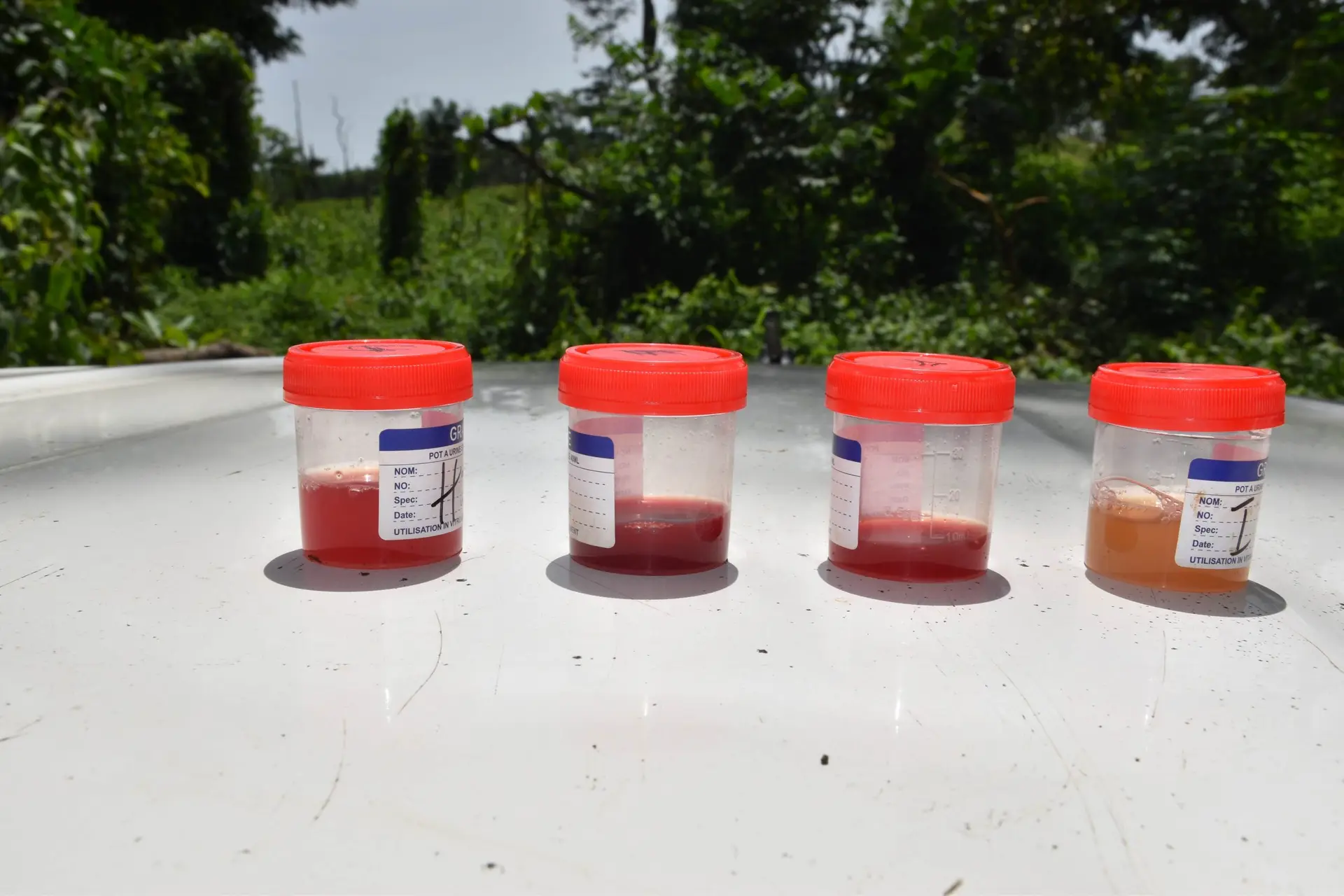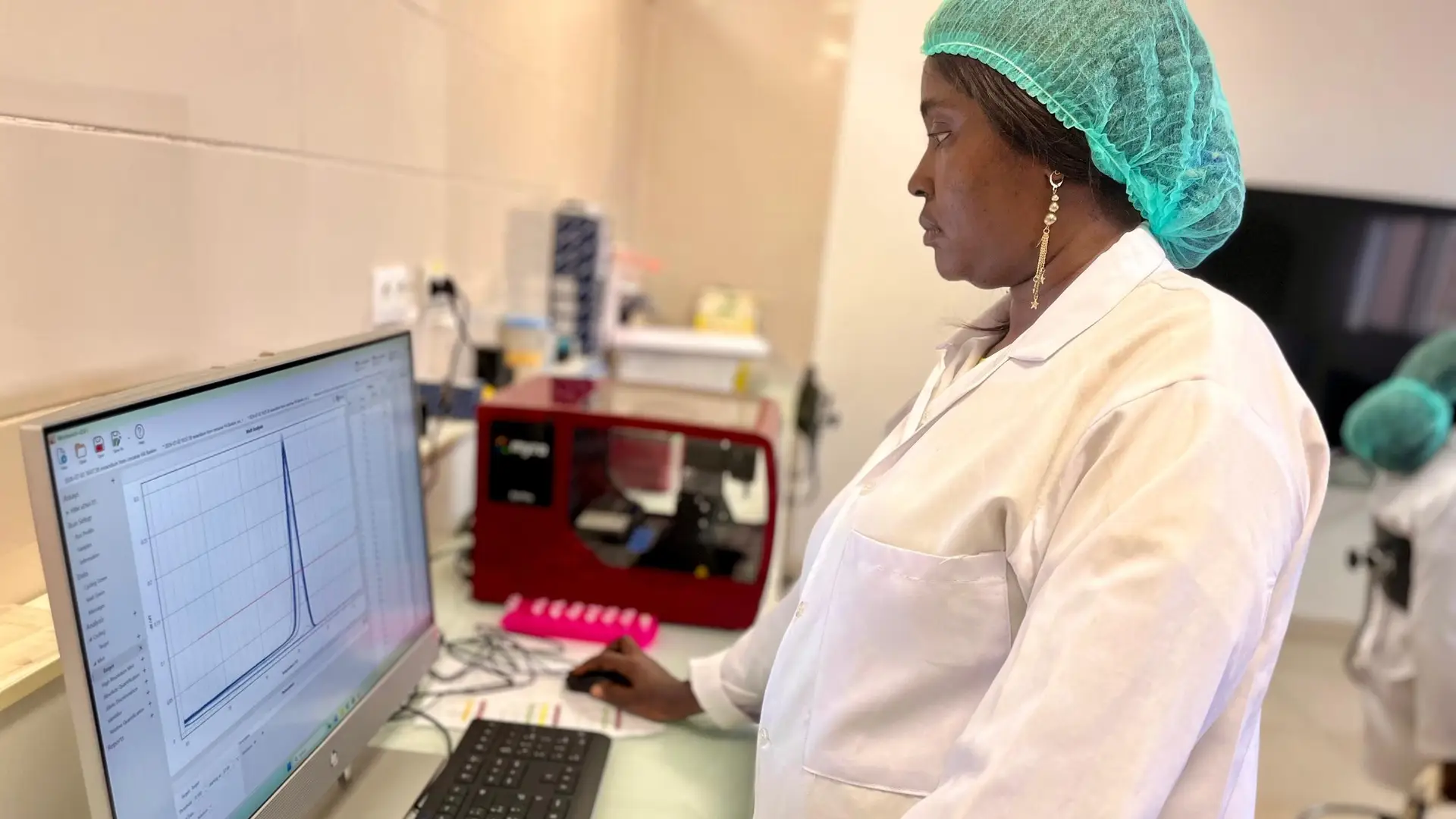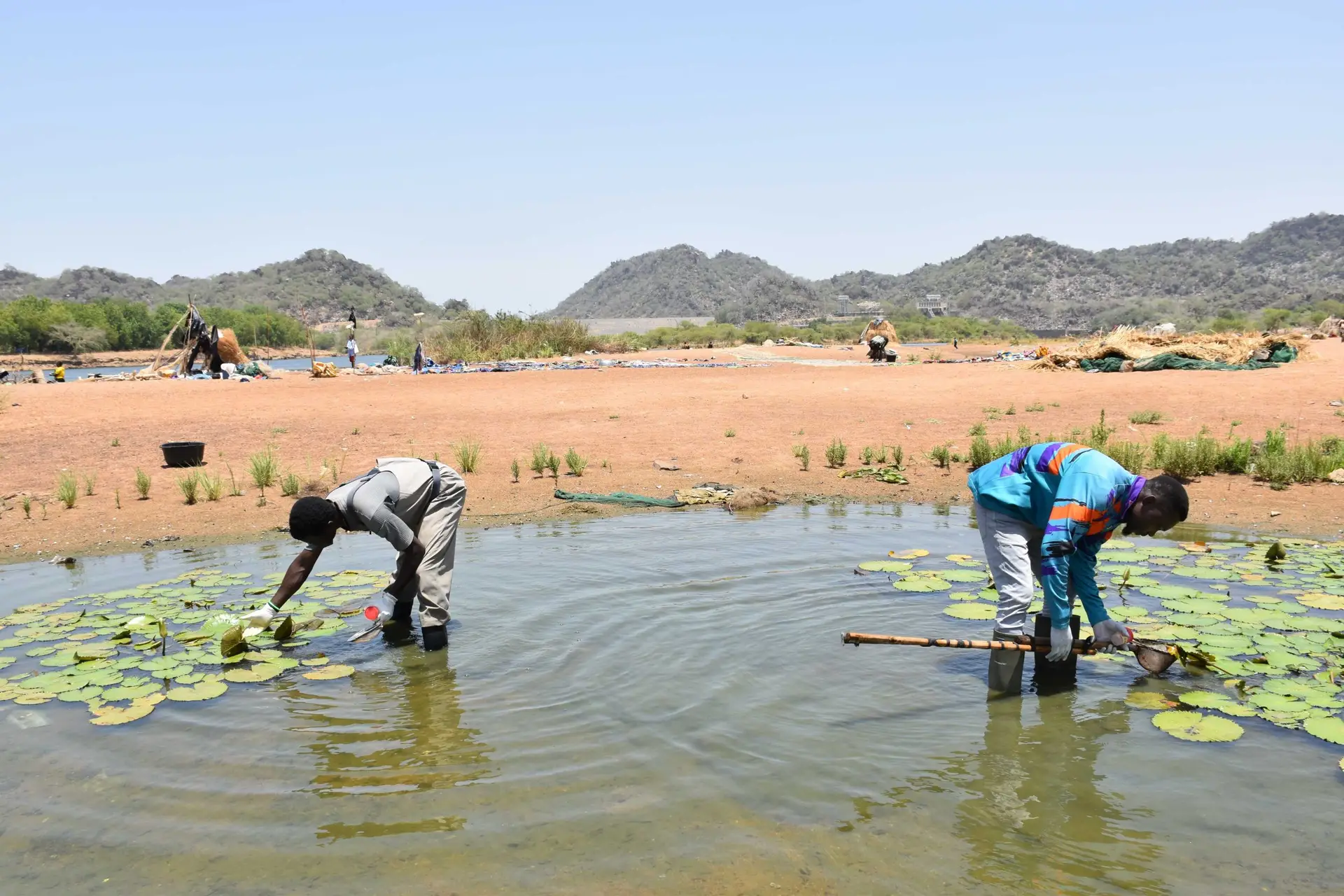
A joint team from CSP, the University of Perpignan, and the Liverpool School of Tropical Medicine (LSTM) collected water samples for environmental DNA (eDNA) analysis directly at a shared water contact point.Water is filtered on site to capture trace genetic material from any organism that has passed through it, snails, cercariae, or the human and animal hosts themselves, allowing the parasite’s presence to be confirmed molecularly, without needing to locate or dissect an infected snail.
The mission reflects the multi-institutional structure behind SHIS-CAM’s evidence base: CSP’s field and local epidemiological knowledge, molecular and parasitological expertise from the University of Perpignan, and LSTM’s experience in.
schistosomiasis surveillance and control, brought together at a single sampling point. Each institution contributes a different piece of the transmission picture (field observation, laboratory confirmation, and public health interpretation), turning a single water sample into evidence that can inform where control efforts should be targeted in Lagdo Health District.