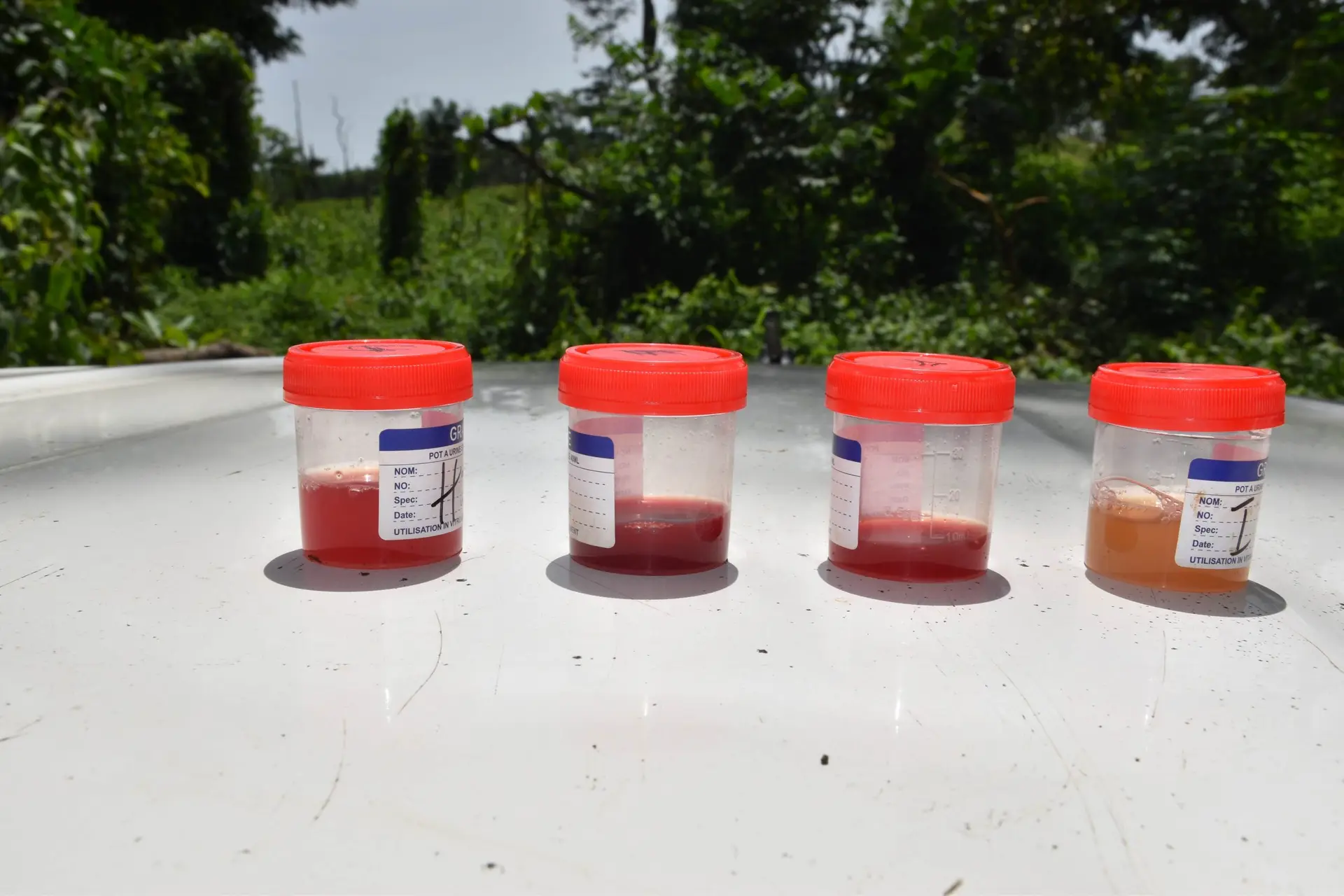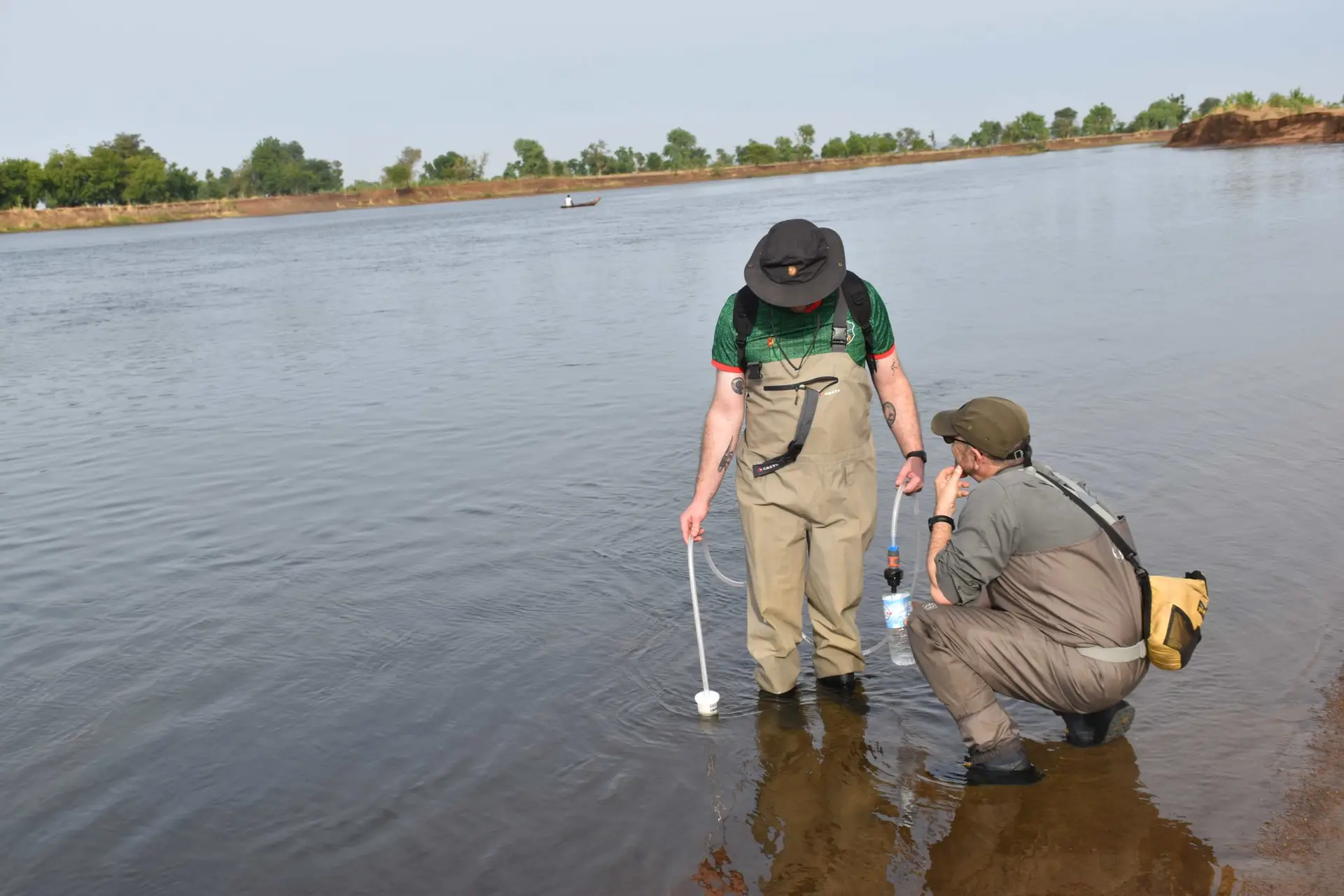
Malacological surveys are the field link between water contact points and the parasite itself. Teams search shoreline vegetation, submerged rocks and slow-moving water for the freshwater snails (Bulinus and Biomphalaria) that act as intermediate hosts for schistosomes.
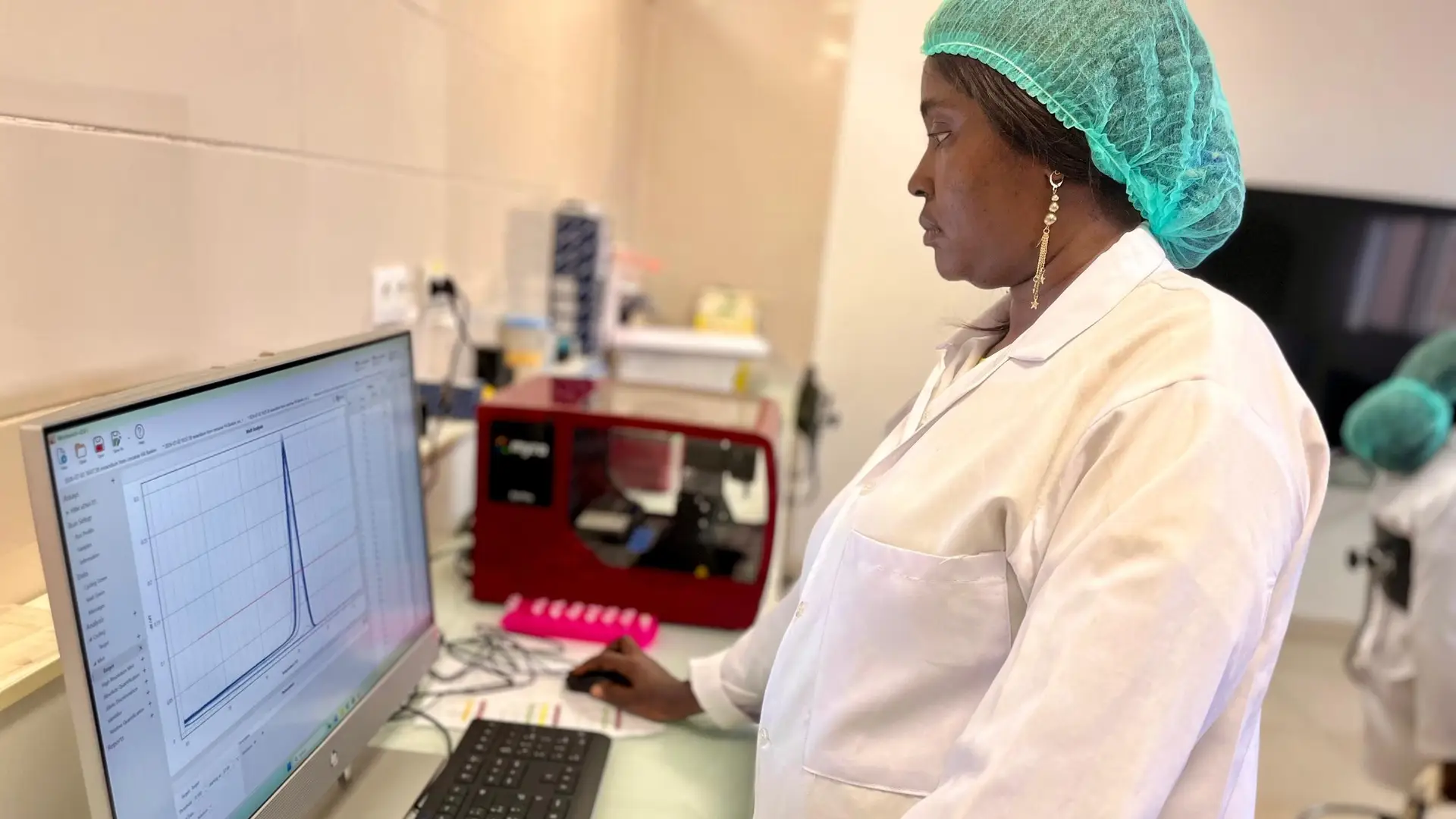
Snails collected on site are identified, checked for cercarial shedding, and where relevant screened for both human (S. haematobium) and animal (S. bovis) infection, directly linking a given water point to active transmission risk rather than assumed risk.
As part of SHIS-CAM, this survey work in the Lagdo health district complements water-contact observations: knowing which snail species are present, and whether they are currently shedding, is what turns a shared water point from a suspected exposure site into confirmed transmission evidence.