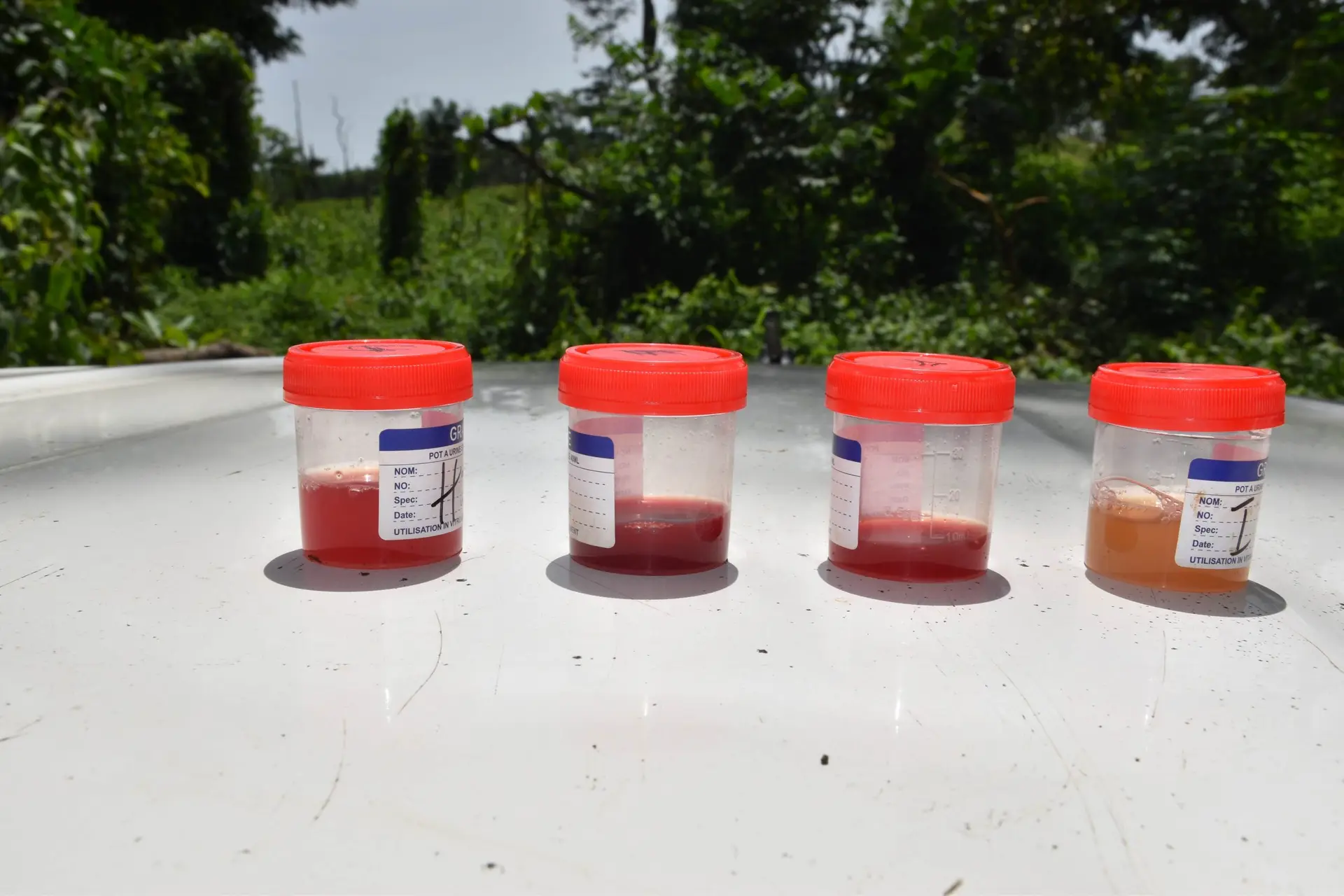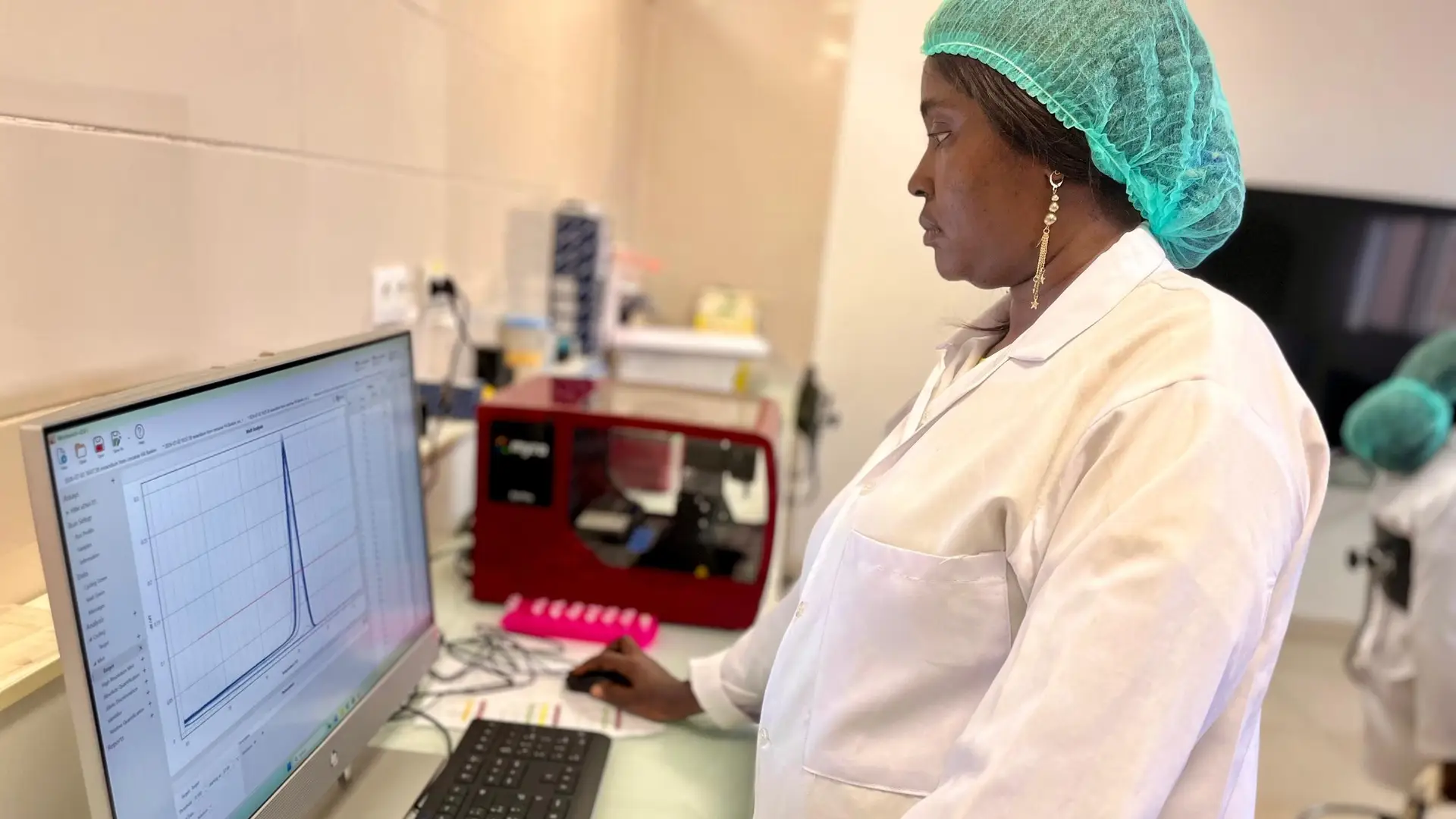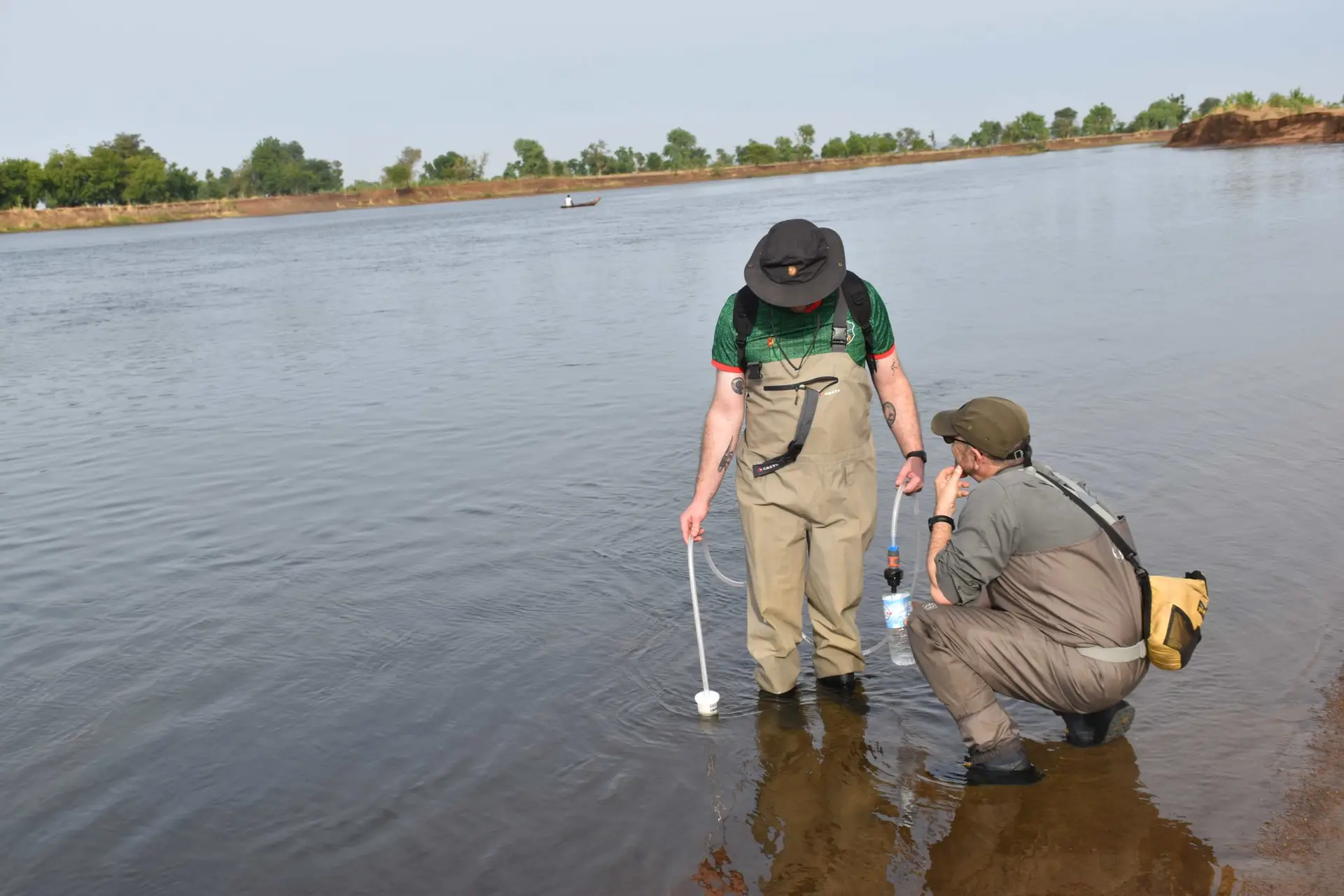
Across much of rural Cameroon, natural water points and reservoirs serve a dual purpose: domestic use such as bathing, laundry and water collection, alongside livestock watering. close, repeated contact between people, animals and the freshwater snails (Bulinus and Biomphalaria) that act as intermediate hosts drives transmission and, in some settings, hybridization between human (S. haematobium) and animal (S. bovis) schistosomes.
This As part of the SHIS-CAM project, CSP is documenting the points across the Matta Health Area where people and livestock draw from the same source the sites where this risk concentrates.
This photograph captures that interface directly: not an abstraction, but the everyday reality of children and cattle sharing a single water point. SHIS-CAM’s work aims to map where the risk concentrates, understand how it moves between people and animals, and ultimately reduce transmission at these shared water points through targeted snail control, community sensitization and mass drug administration.